How the Wheelchair Ramp Process Works: From Your First Phone Call to Installation
August 7, 2026
Home Solutions

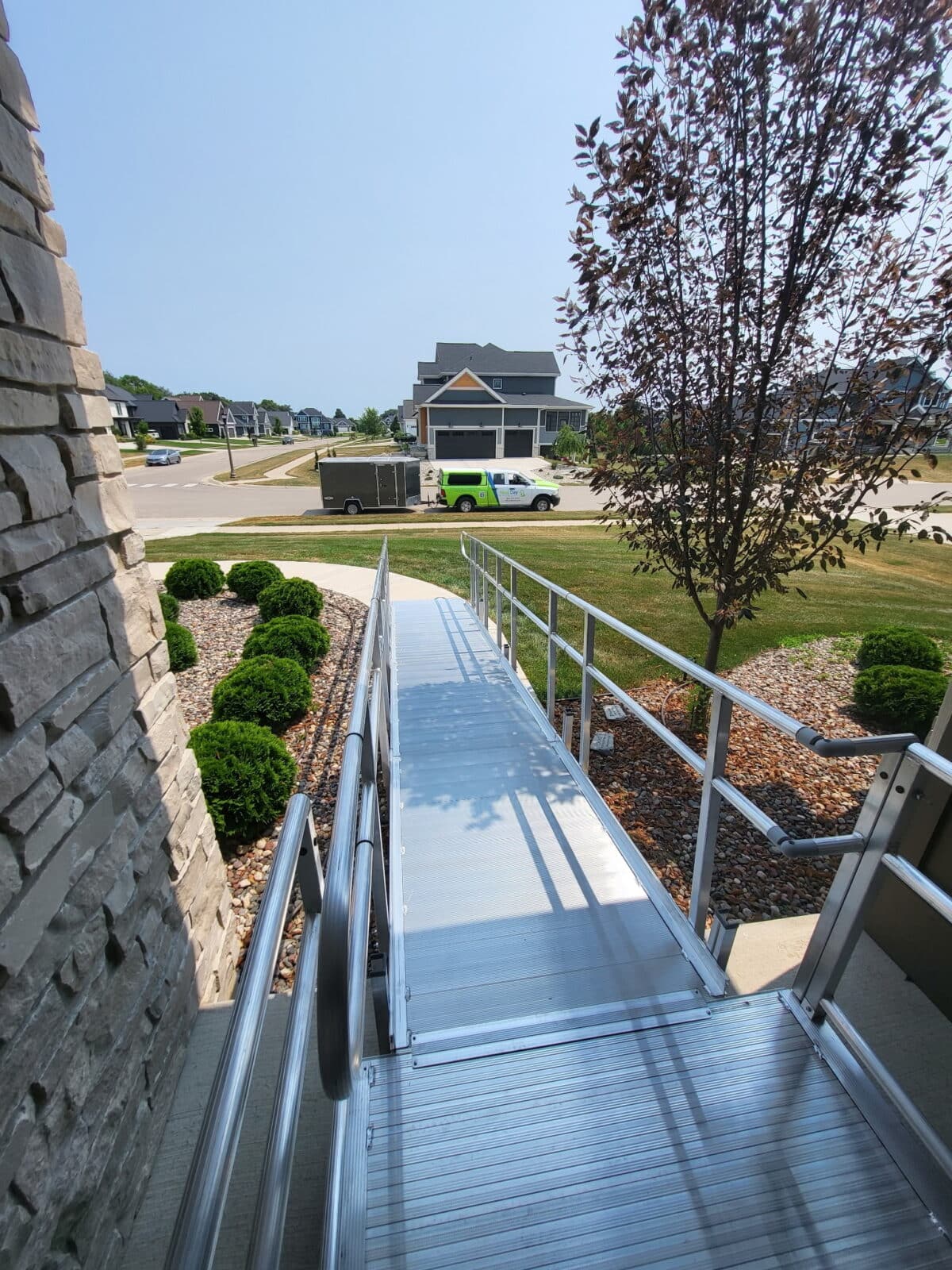
If you or a loved one suddenly needs a wheelchair ramp, one of the first questions is usually, “Where do we even begin?”
At Next Day Access South Central WI, we’ve made the process simple, fast, and personalized. Whether you need a temporary wheelchair ramp, a modular aluminum ramp, or a permanent accessibility solution, we’re here to guide you every step of the way.
Here’s what you can expect.
Step 1: Give Us a Call
Your accessibility journey starts with a phone call to Next Day Access South Central WI at 608-995-3252.
We’ll answer your questions, learn a little about your situation, and schedule an in-home consultation. In most cases, we’re able to visit your home within one to two days.
Our goal is to make the process easy from the very beginning.
Step 2: Your In-Home Accessibility Assessment
At your appointment, you’ll meet with Kayla or Josh, who will take the time to understand your needs before recommending a ramp.
The first thing we ask is:
Who will be using the ramp?
This is one of the most important questions because every ramp should be designed around the individual—not just the home.
We’ll discuss questions like:
These answers help us determine the safest and most practical wheelchair ramp slope.
For example, someone using a power wheelchair can often safely navigate a slightly steeper ramp. That means less ramp is required, which can reduce the overall project cost.
If an elderly spouse or caregiver will be pushing someone in a wheelchair, we typically recommend a longer, gentler ramp that requires much less effort and provides a safer experience.
Every recommendation is customized to your specific mobility needs.
Step 3: Choosing the Best Ramp Location
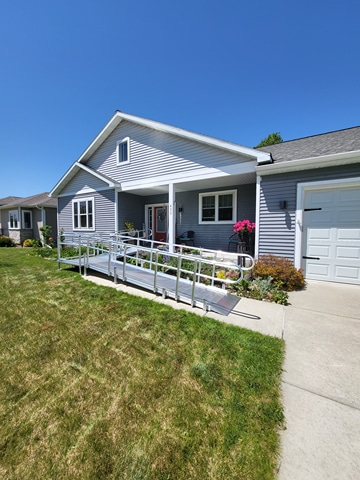
Next, we’ll evaluate where the ramp should be installed.
Most homeowners choose a ramp connected to:
We’ll discuss the most economical layout while also considering how you use your home every day. Sometimes the shortest ramp isn’t necessarily the most convenient one.
Our goal is to find the best balance between safety, appearance, convenience, and budget.
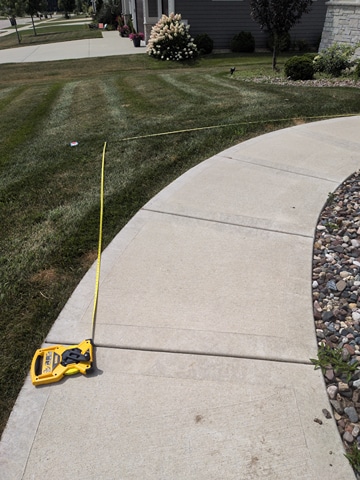
Step 4: Measuring Your Home
This is where the planning becomes precise.
We’ll carefully measure:
These measurements tell us exactly how many inches of elevation need to be overcome.
From there, we calculate exactly how much ramp is needed to create a safe, comfortable entrance.
Step 5: Designing Your Ramp
Before we leave, we’ll lay out the entire ramp design and walk you through it visually.
Every ramp begins with a flat platform at the doorway, giving you a stable place to safely enter or exit your home before traveling down the ramp.
All of our ramps include sturdy handrails for added safety and confidence.
We want every homeowner to understand exactly what their finished ramp will look like before installation begins.
Step 6: Should You Rent or Buy a Wheelchair Ramp?
One of the biggest decisions is whether renting or purchasing makes the most sense.
Renting a Wheelchair Ramp
If you expect to need the ramp for less than six months, renting is often the most cost-effective option.
Typical rental costs include:
Most of our rentals average $350 to $650 per month, depending on the size of the ramp.
Rentals are a popular choice after surgery, during rehabilitation, or while recovering from an injury.
Buying a Wheelchair Ramp
If your mobility needs are expected to be long-term, purchasing is usually the better investment.
In Wisconsin, most residential modular aluminum wheelchair ramps range from approximately $5,000 to $10,000, depending on the amount of ramp required and the layout of the property.
We’ll explain both options so you can choose what’s best for your family and your budget.
Is a Vertical Platform Lift a Better Option Than a Wheelchair Ramp?
While a wheelchair ramp is the right solution for many homes, it isn’t the only option.
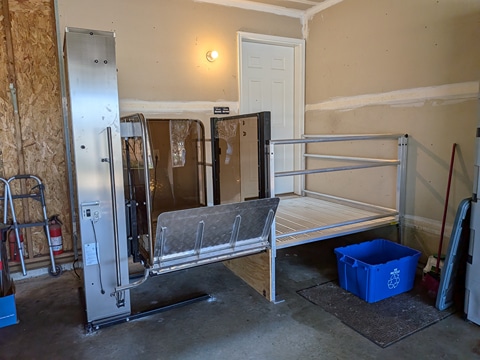
For some homeowners, a Vertical Platform Lift (VPL)—sometimes called a wheelchair lift, porch lift, or open-air elevator—is actually the better fit.
A vertical platform lift works much like an elevator without an enclosed cab. The user rolls onto the platform in a wheelchair or scooter, or steps onto the platform while standing, and simply presses a button to be safely lifted to the height of the entry door.
When is a Vertical Platform Lift the Best Choice?
We often recommend a vertical platform lift when space is limited or when a ramp would require a long footprint.
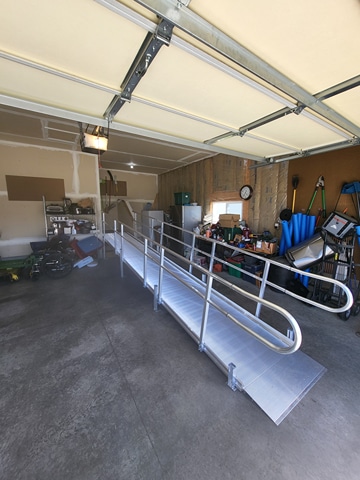
One of the most common examples is a garage entrance. Many homeowners want to continue parking their vehicles inside the garage while still having room for storage, tools, or a workshop. A wheelchair ramp can sometimes take up a significant amount of floor space, while a vertical platform lift provides the same accessibility in a much smaller area.
A vertical platform lift may also be a great option if:
We Install Vertical Platform Lifts Throughout South Central Wisconsin
At Next Day Access South Central WI, we install both wheelchair ramps and vertical platform lifts. During your in-home consultation, we’ll evaluate your home, discuss your mobility needs, and explain the advantages of each option. If you’re unsure whether a wheelchair ramp or a vertical platform lift is the better choice, we’ll walk you through both options so you can make an informed decision with confidence.
Step 7: Fast Professional Installation
Once you decide to move forward, we move quickly.
Most installations are completed within 1 to 5 days, depending on local permitting requirements.
The installation itself usually takes one day, with most projects completed in 4 to 8 hours.
Our experienced installers make sure your ramp is secure, safe, and ready to use before we leave.
Why Homeowners Choose Next Day Access South Central WI
We know that needing a wheelchair ramp is rarely something people plan for. Often, it’s following a hospitalization, surgery, injury, or a gradual change in mobility.
That’s why we focus on making the process as stress-free as possible.
From your first phone call through installation, you’ll work with a local team that listens, explains your options clearly, and designs a solution specifically for your home and your mobility needs.
Whether you’re looking for a wheelchair ramp in Madison, Sun Prairie, Waunakee, Verona, Middleton, Fitchburg, Windsor, Stoughton, Cottage Grove, or anywhere in South Central Wisconsin, we’re here to help.
Ready to Get Started?
If you or someone you love is having difficulty getting in and out of the house safely, don’t wait until a fall happens.
Call Next Day Access South Central WI at 608-995-3252 to schedule your in-home consultation. We’ll answer your questions, evaluate your home, and help you choose the accessibility solution that fits your needs—often within just a few days.
Frequently Asked Questions About Wheelchair Ramps
How much does a wheelchair ramp cost in Wisconsin?
The cost of a wheelchair ramp depends on several factors, including the height of your entrance, the length of ramp required, the layout of your property, and whether you choose to rent or purchase.
For homeowners purchasing a modular aluminum wheelchair ramp, most projects in Wisconsin range from approximately $5,000 to $10,000. During your free in-home consultation, we’ll measure your home and provide an exact quote based on your needs.
Does Medicare pay for a wheelchair ramp?
Original Medicare typically does not cover the cost of a residential wheelchair ramp because it is considered a home modification rather than durable medical equipment.
However, there may be other funding options available depending on your situation. Some Medicare Advantage plans, veterans’ benefits, Medicaid waiver programs, long-term care insurance policies, or local community organizations may offer assistance. We’re happy to discuss potential resources during your consultation.
Should I rent or buy a wheelchair ramp?
It depends on how long you’ll need it.
If you expect to need a ramp for less than six months, renting is often the most economical choice. Rentals typically include an installation fee, a removal fee, and a monthly rental payment.
If your mobility needs are expected to be long-term, purchasing is usually the better investment because you’ll own the ramp and avoid ongoing monthly rental costs.
We’ll help you compare both options so you can make the best decision for your family.
How quickly can a wheelchair ramp be installed?
One of the biggest advantages of working with Next Day Access South Central WI is our fast response time.
Most in-home consultations are scheduled within one to two days of your call. After you approve the project, installation is typically completed within 1 to 5 days, depending on local permitting requirements.
Most installations take just one day, usually between 4 and 8 hours.
Do I need a permit for a wheelchair ramp in Wisconsin?
Permit requirements vary by municipality.
Some cities and villages require permits for residential wheelchair ramps, while others do not. If a permit is required, we’ll explain the process and help ensure everything is completed correctly before installation begins.
Are your wheelchair ramps ADA compliant?
While the Americans with Disabilities Act (ADA) primarily applies to public buildings, we use ADA guidelines as an important reference when designing residential ramps whenever practical.
Because every home and every person’s mobility needs are different, we customize the ramp’s slope, layout, and landing sizes to provide the safest and most functional solution for your specific situation.
What type of wheelchair ramp is best for my home?
The best ramp depends on several factors, including:
During your free in-home assessment, we’ll recommend the option that best balances safety, convenience, appearance, and cost.
What areas do you serve?
Next Day Access South Central WI proudly serves homeowners with wheelchair ramps and vertical platform lifts throughout Madison, Sun Prairie, Middleton, Verona, Waunakee, Fitchburg, Monona, DeForest, Cottage Grove, Stoughton, Lodi, Janesville, Beloit, Beaver Dam, Baraboo, Reedsburg, Lake Mills, Wisconsin Dells and many surrounding communities across South Central Wisconsin.
If you’re unsure whether you’re in our service area, give us a call at 608-995-3252. We’re always happy to help.
Reach out to the South Central Wisconsin team for a custom quote!
Ready to make your home or business more accessible? Our South Central Wisconsin team is here to help with personalized recommendations, fast quotes, and expert support—every step of the way.

Reach out to the South Central Wisconsin team for a custom quote!
Ready to make your home or business more accessible? Our South Central Wisconsin team is here to help with personalized recommendations, fast quotes, and expert support—every step of the way.