Medically Ready Does Not Always Mean Home Ready
February 27, 2026
Aging in Place | Caregivers

Being told you’re ready to go home after a hospital stay or rehab can bring relief. The procedure is complete. Therapy goals were met. You are medically stable. The care team agrees discharge is appropriate.
But for many people across Madison and South Central Wisconsin, an important question is often overlooked:
Home readiness refers to whether a person’s living environment safely supports their functional abilities after illness, injury, or hospitalization. Medical readiness and home readiness are not the same—and when they don’t align, recovery can quickly become more difficult, risky, and stressful than expected.
Healthcare teams do an excellent job preparing patients medically for discharge. What often receives less attention is the environment people return to, such as the stairs, bathrooms, doorways, and layouts they must navigate daily while recovering.
This gap becomes especially visible when someone:
Even individuals who make strong progress in the hospital or rehab can struggle once they’re home if their environment doesn’t support their current abilities.
As Angie Ingraham, MD, MS, FACS, BCPA, of True North Patient Advocates, LLC, explains:
“The most common issues are falls, near-misses, and a loss of independence that wasn’t inevitable. I often see people discharged from the hospital or rehab having made good progress, only to struggle once they’re home because the environment doesn’t support their current abilities. That mismatch can lead to setbacks, rehospitalizations, or earlier-than-necessary transitions to assisted living or skilled nursing facilities.”
This environment–ability mismatch is one of the most common, and preventable, causes of post-discharge complications.
Most homes were designed for people who are fully mobile and steady. After surgery or illness, even familiar spaces can present unexpected challenges.
Common issues include:
Across Dane, Rock, Green, and Dodge Counties, these challenges appear in homes of all ages and styles.
As highlighted in a home accessibility white paper, outcomes are best when the home environment is evaluated as part of the care transition itself—not as an afterthought once problems arise. The paper emphasizes that when homes are not aligned with a person’s functional abilities, the risk of falls, caregiver injury, and avoidable rehospitalization increases significantly.
As a medical social worker, I’ve seen how often discharge planning focuses on medications, follow-up appointments, and therapy schedules—while quietly assuming the home will “work itself out.” The challenge is that most discharge planning happens inside the hospital, not inside the home where recovery actually takes place.
One patient I worked with was discharged home after a short hospital stay. Therapy goals were met, a new walker was issued, and the discharge plan appeared solid on paper. But once home, the reality set in. Tasks that had previously been simple, getting in and out of bed, safely using the bathroom, were suddenly difficult and exhausting. Although a family caregiver was available, the home lacked the right tools and modifications to support the caregiver and the patient.
What seemed manageable in theory quickly became overwhelming in practice. By the next day, the patient was back in the emergency room.
This is exactly the gap identified in the white paper: care transitions are most successful when clinical progress and home environment readiness are addressed together, rather than in isolation. When the environment is overlooked, even well-planned discharges can lead to preventable setbacks.
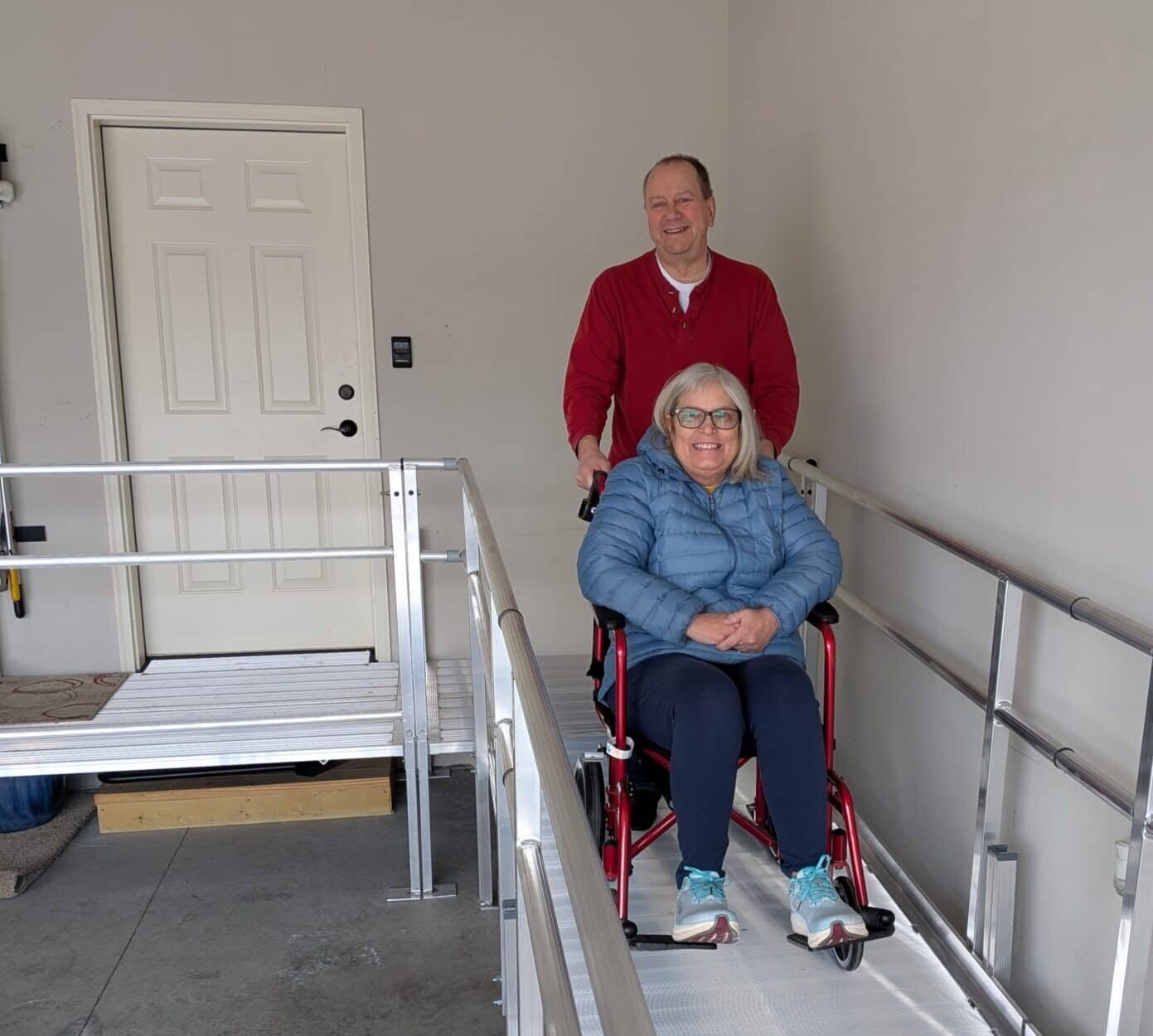
Being home ready does not mean remodeling your house. It means adapting the environment to match current abilities, either temporarily or long-term. And these simple adaptions can be hard to see from the hospital. Connecting with a community partner to help the family evaluate what is needed in this critical moment is key.
Key questions to community partners help assess before discharge include:
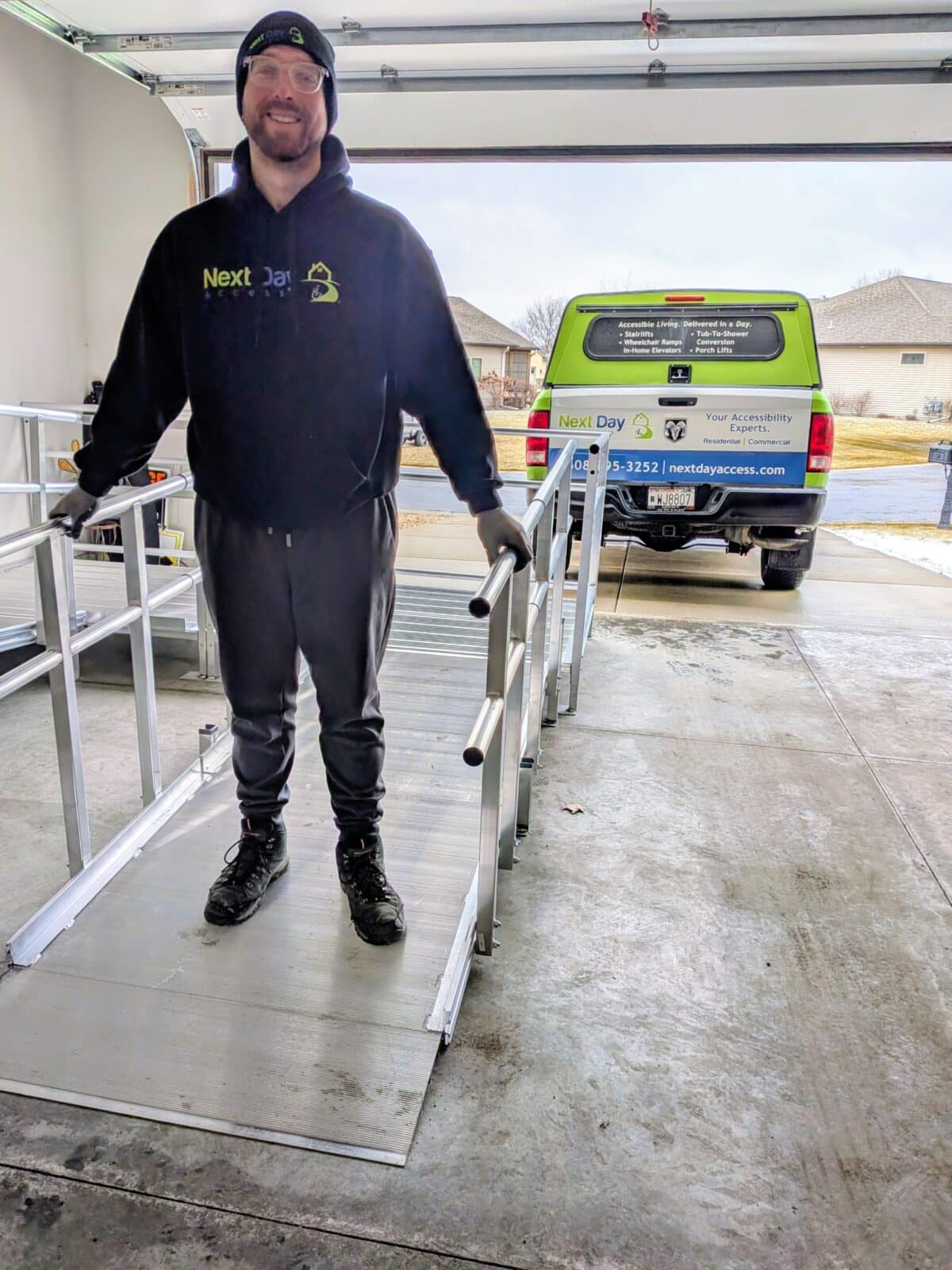
Temporary and rental solutions—such as ramps, stair lifts, and bathroom safety supports—are often effective ways to bridge this gap during recovery.
👉 Learn more about home accessibility solutions in South Central Wisconsin here:
https://www.nextdayaccess.com/south-central-wi/
One consistent finding in accessibility research—including the referenced white paper—is that the strongest outcomes occur when clinical insight and skilled environmental modification work together.
When solutions are added without proper assessment or training, the result can be:
A coordinated, function-focused approach supports safety, dignity, and independence throughout recovery.
Recovery doesn’t end at discharge.
A successful transition home considers:
When these elements align, people recover more safely, maintain independence longer, and avoid preventable setbacks.
Being medically ready is essential.
Being home ready is just as important.
Reference
Concepts adapted from a home accessibility and care transitions white paper emphasizing the importance of aligning environment, function, and care coordination to improve post-discharge outcomes.
Reach out to the South Central Wisconsin team for a custom quote!
Ready to make your home or business more accessible? Our South Central Wisconsin team is here to help with personalized recommendations, fast quotes, and expert support—every step of the way.

Reach out to the South Central Wisconsin team for a custom quote!
Ready to make your home or business more accessible? Our South Central Wisconsin team is here to help with personalized recommendations, fast quotes, and expert support—every step of the way.