My Surgeon Said I’ll Be Non-Weight Bearing for 6–10 Weeks. How Do I Prepare My Home?
January 7, 2026
Home & Bath Modification | Home Solutions

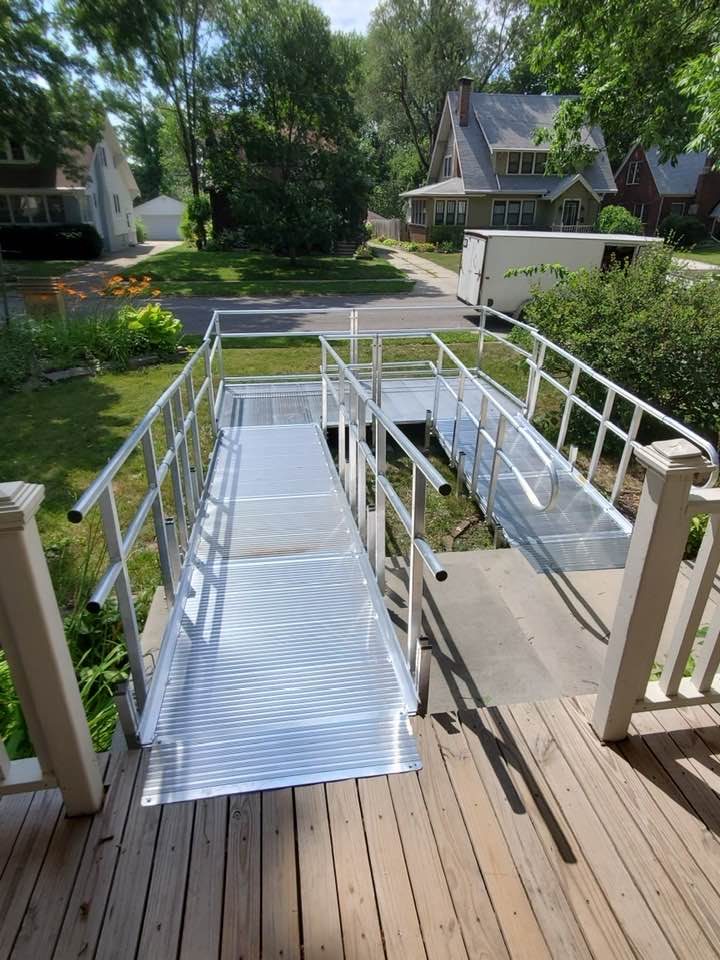
If you’re returning home after surgery and have been told you’ll be non-weight bearing for several weeks, planning your home setup ahead of time is one of the most important steps you can take for a safe recovery. There are many reasons a surgeon might tell you that you can’t put weight on one leg for a period of time. For some individuals, a short stay in a rehab facility makes sense. But for many people across Madison and South Central Wisconsin, people are returning directly home after surgery—sometimes the same day, sometimes after just a night or two in the hospital.
The big question becomes:
Is your home actually set up for you to recover safely?
Most homes aren’t, even single story homes. We see this often in older homes across Dane, Columbia and Rock Counties specifically. Even a few entry steps can become a major barrier after surgery.
The Gap No One Talks About: What Happens After Surgery
As a medical social worker, I saw this situation play out over and over again—the lack of planning for what happens after surgery.
There is often extensive preparation for the procedure itself: appointments, imaging, clear instructions, and careful coordination. But far less attention is given to the critical transition period that follows, when someone returns home and suddenly has to navigate everyday life without being able to put weight on one leg.
One patient in particular has always stayed with me.
He had undergone foot surgery and was discharged to his home in Beloit, Wisconsin, with his spouse. The plan seemed straightforward: he had a wheelchair in the trunk, and they were eager to get him home to rest. But as his wife pulled into their driveway, reality hit. She called me from her car because they suddenly realized something they hadn’t planned for.
To get into their home, they needed to go up two steps.
Two small steps that had never mattered before became an immovable barrier. There was no ramp. No railing positioned for one-legged support. No safe way for her to help him without risking injury to either of them.
This is the moment where stress spikes, safety drops, and people are forced to improvise—often in ways that lead to falls, re-injury, or caregiver strain.
Situations like this are incredibly common, especially now that many people return directly home after surgery, sometimes the same day or after just one night in the hospital.
The good news is that most of these challenges are preventable. With early planning, homes can be adapted—temporarily or permanently—to support recovery, protect caregivers, and allow healing to happen safely where people want to be most: at home.
Beyond the Scooter: Thinking Past “How Will I Get Around?”
Many people immediately focus on what device they’ll use—crutches, a knee scooter, or a wheelchair. That’s important, but it’s only part of the picture.
Recovery is about how your whole home supports you:
The good news? There are excellent temporary and permanent accessibility solutions that can make these weeks far safer—and far less stressful—than most people expect.
Planning ahead reduces the risk of:
A Walk-Through of Your Home: What to Consider Before Surgery
You will need to leave your home—for follow-up appointments, physical therapy, or simply to get some fresh air.
Ask yourself:
Even a few steps can become dangerous when you’re balancing on one leg.
A better option:
A temporary or permanent ramp can provide safe, stable access and can often be installed quickly. In South Central Wisconsin, ramp solutions are commonly used for short-term recovery and can be rented or purchased, depending on your needs.
This question matters more than people realize.
Possible solutions include:
Timing matters here—custom stair solutions require more lead time, and waiting limits your choices.
Bathrooms are often the hardest spaces to navigate while non-weight bearing.
Toileting
Standing up from a seated position using only one leg is harder than it sounds—try it once, and you’ll see why.
Helpful options include:
A common mistake?
Relying on suction-cup grab bars or having them installed without proper training. These often fail when people need them most.
Bathing and Showering
Even a small lip or tub edge can become a major obstacle. Consider, using one leg, how will you enter? What will you hold onto for balance? Possible solutions:
You don’t need a full renovation to make bathing safer—but you do need a plan. We partner with you to make a plan for Bathroom solutions that are highly customizable to meet your exact needs.
Take a slow walk through your home and look at it with fresh eyes:
Small changes here can prevent big setbacks.
The Biggest Mistake We See: Waiting Too Long
One of the most common challenges people face is timing.
When planning starts a week—or even days—before surgery:
The best time to plan is as soon as your surgery is scheduled.
For example:
Planning early gives you safer solutions and options that fit your home and style.
Community Resources in South Central Wisconsin
In addition to professional accessibility solutions, we’re fortunate to have strong community support across the region.
Organizations like Access to Independence and local loan closets may offer free short-term equipment options. These can be helpful complements to home modifications, depending on availability and individual needs.
A Final Thought
Recovery is hard enough without your home working against you.
A little planning can mean:
Homes can adapt—and with the right guidance, they often do so faster and more easily than people expect.
We get a lot of questions on this topic at Next Day Access South Central WI, and we are happy to answer yours! Here are a couple of the common ones:
What If Surgery Happened Unexpectedly or I Didn’t Plan Ahead?
If your surgery came up quickly—or you didn’t realize how challenging returning home would be—you still have options.
In fact, this is one of the most common situations we see across Madison and South Central Wisconsin. Many people are discharged home with little notice and suddenly need safe access, bathroom support, or a way to navigate stairs while non-weight bearing.
Even on short notice, solutions are often available. For example, through Next Day Access South Central WI, ramps, stair lifts, and bathroom safety solutions can be installed within one day of calling, depending on your home and needs. While last-minute planning may limit certain custom options, it does not mean you’re out of choices. The most important step is reaching out as soon as possible. From there, we will do a free assessment of your home, identify immediate safety risks, and create a practical plan to help you move safely and recover at home.
Yes—temporary and rental accessibility solutions are often a great fit if you expect to need support for only a short period, such as 6–10 weeks while recovering from surgery.
At Next Day Access South Central Wisconsin, we regularly help people across Madison and the surrounding counties with short-term solutions that make it possible to recover safely at home—without committing to permanent modifications.
One of the most common rental options is a wheelchair ramp. Ramp rentals typically include:
Once your recovery is complete, you simply contact us, the rental payments stop, and the ramp is taken down.
In addition to ramps, there are rental options for:
Rental solutions offer flexibility, faster timelines, and peace of mind—especially when your mobility needs are temporary.
Written by Kayla Lalande, MSW CISW
Owner & Family Consultant – Next Day Access South Central Wisconsin
Reach out to the South Central Wisconsin team for a custom quote!
Ready to make your home or business more accessible? Our South Central Wisconsin team is here to help with personalized recommendations, fast quotes, and expert support—every step of the way.

Reach out to the South Central Wisconsin team for a custom quote!
Ready to make your home or business more accessible? Our South Central Wisconsin team is here to help with personalized recommendations, fast quotes, and expert support—every step of the way.